
Palace Picture House · Programme note
Alam Ara 1931
India's first talking picture opened in Bombay in March 1931, drew crowds for weeks and had seven songs, and no print of it is known to survive.
By HertzyPertzy · Updated · 5 minute read
In short
Alam Ara (Ornament of the World) is a Hindustani film of 1931, directed and produced by Ardeshir Irani, and is generally called India's first sound film. It opened in Bombay on 14 March 1931, with seven songs and a story taken from a Parsi stage play. Crowds were large and the music set a pattern that Indian films have followed since. No print is known to survive: only posters, stills and a promotional booklet remain, and film historians count it among the great losses of Indian cinema.
Watch the film
There is no clean free copy to play or link to here.
Alam Ara
1931
- Original title
- Alam Ara, in Hindustani (a mix of Hindi and Urdu)
- Released
- 14 March 1931, Majestic Cinema, Bombay; by most accounts it ran for eight weeks
- Made by
- Imperial Film Company, Bombay. Director, producer and screenwriter Ardeshir Irani; sound by Irani and Rustom Bharucha; shot by Adi M. Irani
- Cast
- Master Vithal, Zubeida, Prithviraj Kapoor, Jilloo, Sushila, L. V. Prasad, with Wazir Muhammad Khan in a cameo as a fakir
- Filmed
- Jyoti Studios, Bombay, in about four months, mostly at night
- Length
- About 124 minutes, according to published listings
- Format
- Black and white, sound on film recorded in a single-system process (Tanar), seven songs
- Copyright
- Under Indian law, which gives films 60 years from the year after publication, the film is long out of copyright. Its United States term is separate and sources differ on how it applies to an Indian film: the usual reading is 1 January 2027, with the other works of 1931. No print is known to survive
The story
A king has two queens, Navbahaar and Dilbahaar, and no son. A fakir prophesies that a child will be born, and that his life will hang on a necklace. The jealous Dilbahaar is carrying on with the army chief, Adil, and between them they spoil the necklace and so the boy's life. The king's other wife, Mehar Nigar, is turned out of the palace and dies after giving birth to a daughter, Alam Ara.
The daughter grows up and falls for the prince, who is revived each night. In the end the truth comes out, Adil is freed, and the young couple live happily. It is a costume romance taken from Joseph David's Parsi stage play of the same name.
Making a talkie in Bombay
Ardeshir Irani ran the Imperial Film Company. By most accounts he saw the American part-talkie Show Boat (1929) at a Bombay cinema and decided that his next picture would speak. He and a colleague, Rustom Bharucha, learned the basics of recording from an American expert, Wilford Deming, and then did the sound themselves. They used a single-system method called Tanar, which records the sound during filming, on the film itself. Microphones were hidden around the actors, and by one account in the set's foliage.
The studio stood near a railway track. Trains meant noise, so shooting went on mostly at night, between about one and four in the morning, and took roughly four months., and critics praised the performances and songs but faulted the sound.
Ruby Myers, Irani's first choice for the title role, could not speak the language well enough, so Zubeida was cast. Master Vithal took the male lead, and Prithviraj Kapoor played Adil.
The songs
The film had seven songs. Sources differ over who composed them: Firozshah Mistry and B. Irani are credited, but Mistry's son says his father wrote all of them. The best known is "De De Khuda Ke Naam Pe Pyaare", sung by Wazir Muhammad Khan, who also appears in the film as a fakir. It is called the first song of Hindi cinema. Zubeida sang most of the others.
There was no playback, as the term is now used: the singers sang on the set while a small band, by one account a pump organ and a tabla player, played beside them out of shot. Some popular accounts nonetheless call Wazir Muhammad Khan India's first playback singer. Either way, the pattern was set.
It opened at the Majestic Cinema in Bombay on 14 March 1931 to packed houses. The run is given as eight weeks, and police are said to have been called to manage the crowds. Until then every Indian film had been silent.
The lost film
No print of Alam Ara is known to survive. Stills, posters and a promotional booklet do, and so does a printing machine of the period. A story long repeated says the last print burned in a fire at the National Film Archive of India in Pune in 2003. The archive's founder-director, P. K. Nair, has said that is wrong: by his account the film was lost before the archive was founded in 1964, and the 2003 fire destroyed mostly the negatives of another company, Prabhat.
Exactly how it was lost is not recorded. Indian prints of the period often decayed in hot, damp storage, and some were melted down or thrown away. Nair compiled a list of 21 missing Indian films, Alam Ara among them, and said that finding even a reel or two would be a revelation. A British Film Institute piece calls the film a "grail" for Indian film historians. Its fate is not known: it may have been thrown away, or it may lie in a private collection.
The law
In India, films are protected for 60 years counted from the beginning of the calendar year after publication. Counted that way a film of 1931 has long been free there,.
The American position is separate. Works first published in 1931 are due to enter the United States public domain on 1 January 2027, on the 95-year rule, and that is the date most guides give for the year's films. How the rule applies to an Indian film is a question on which sources differ, and nothing here should be taken as legal advice.
Why it matters
It brought sound to Indian cinema. By the usual account Alam Ara is India's first sound film. Kalidas, a Tamil and Telugu film, followed in 1931, and Marathi and Telugu talkies in 1932.
It put song at the heart of the film. Sound brought the musical, and with it the song-and-dance tradition that Indian cinema kept.
It shows how much is gone. A film that filled a Bombay cinema for two months has vanished, and it is far from the only early Indian film to do so.
It was remade. Telugu versions came in 1942 and 1967, and Hindi ones in 1956 and 1973.
On the same programme
Some of these films are rooms you can play
These notes come from Reel Trouble, a comedy platformer through film history. Every room in it is a movie set, built from scratch as a parody of a real film, and a fall is never a death: it is a retake.
-
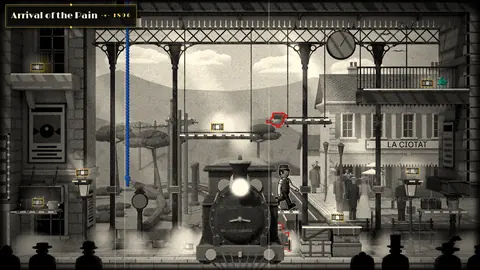 1896
Arrival of a Train at La Ciotat
Our room: Arrival of the Pain
-
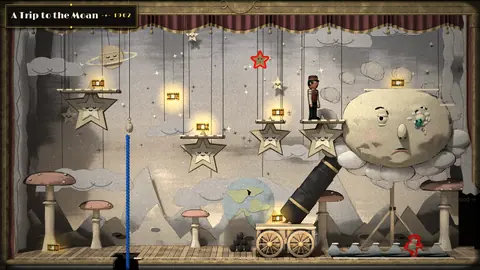 1902
A Trip to the Moon
Our room: A Trip to the Moan
-
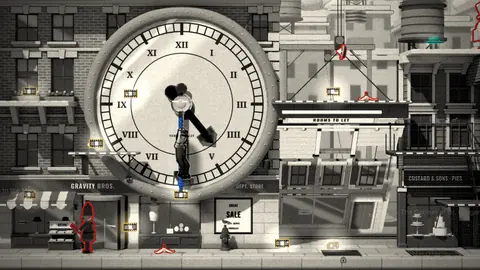 1923
Safety Last!
Our room: Safety Second
Free, in a desktop browser or as a download for Windows, Mac and Linux.
Quick answers
Was Alam Ara the first Indian sound film?
Yes, by the usual account. It opened at the Majestic Cinema in Bombay on 14 March 1931, and it is described as India's first talkie.
Who directed Alam Ara?
Ardeshir Irani directed, produced and wrote the screenplay. He ran the Imperial Film Company in Bombay.
What is Alam Ara about?
A king's jealous second queen and a scheming army chief ruin the heir to the throne, and the daughter of the banished first queen, Alam Ara, falls in love with him. The story comes from Joseph David's Parsi stage play of the same name.
Can you watch Alam Ara today?
No. No print is known to survive. What remains are posters, stills, a promotional booklet and a printing machine of the period.
Did Alam Ara burn in the 2003 National Film Archive fire?
Some reports say so, but the archive's founder-director P. K. Nair has said the film was lost before the archive existed in 1964, and that the 2003 fire mainly destroyed negatives of another company.
What was the first song in Alam Ara?
"De De Khuda Ke Naam Pe Pyaare", sung by Wazir Muhammad Khan, who also appeared in the film as a fakir. It is called the first song of Hindi cinema.
Is Alam Ara in the public domain?
In India the term for films is 60 years from the start of the year after publication, so a film of 1931 is long free there. In the United States, works of 1931 are due to enter the public domain on 1 January 2027, though how that applies to an Indian film is a matter on which sources differ.
Sources and further reading
- Alam Ara, Wikipedia: cast, production, songs, reception and the account of the loss
- 7 Things You Should Know About the First Indian Talkie, Alam Ara, The Quint
- India's first talkie: not a glorious affair, The Tribune
- The internationalism of P. K. Nair, the celluloid man, Shruti Narayanswamy, British Film Institute, Sight and Sound, 2017
- History of Indian cinema, Wikipedia: the silent era and the first sound films
- Copyright law of India, Wikipedia: the term for cinematograph films
- Public Domain Day, Wikipedia: the next Public Domain Day, 1 January 2027