
Palace Picture House · Programme note
The Champ 1931
A washed-up boxer in Tijuana, a nine-year-old who believes in him, and a Best Actor award that was won by one vote or tied, depending who tells it.
By HertzyPertzy · Updated · 6 minute read
In short
The Champ is an American drama of 1931, directed by King Vidor for MGM, with Wallace Beery as a drunken ex-heavyweight in Tijuana and Jackie Cooper, aged nine, as his devoted son Dink. Frances Marion's story won the Academy Award, and Beery shared the Best Actor award with Fredric March in a famous tie. It made Cooper a star, it is a standard example of the early-sound tear-jerker, and it was remade in 1953 as The Clown and in 1979 under its own title. It is due to enter the public domain in the United States on 1 January 2027.
Watch the film
It is not played on this page: see where to watch it.
Find where to stream, rent or buy it, on JustWatch.
- Released
- November 1931, MGM; sources give 9 November (Astor Theatre, New York) and 13 November (Hollywood) for the first showings
- Director
- King Vidor
- Written by
- Story by Frances Marion; screenplay by Leonard Praskins and Wanda Tuchock, with Marion
- Cast
- Wallace Beery (Andy "Champ" Purcell), Jackie Cooper (Dink), Irene Rich (Linda), Roscoe Ates (Sponge), Edward Brophy (Tim)
- Production
- Metro-Goldwyn-Mayer; Vidor credited as producer, Harry Rapf and Irving Thalberg uncredited. Camera Gordon Avil, editing Hugh Wynn
- Length
- About 85 to 87 minutes, depending on the source
- Awards
- Won Best Actor (Wallace Beery, tied with Fredric March) and Best Original Story (Frances Marion); also nominated for Outstanding Production and Best Director
- Copyright
- Published 1931, so due to enter the public domain in the United States on 1 January 2027, with the other works of that year. Modern restorations and scores have rights of their own
The story
Andy Purcell, known as the Champ, was once the heavyweight champion of the world. Now he lives in Tijuana, drinks and gambles. His son Dink, about eight, is the only person who still thinks the Champ is the champ. The boy looks after his father, and the father keeps making promises he breaks.
After a lucky streak at the track Champ buys Dink a racehorse, Little Champ, and then loses it in a gambling binge. Dink's mother Linda, who left years before, has married a rich man and sees her son by chance. She wants to give him a proper home. Champ, ashamed, agrees to let the boy go. Dink runs away and comes back to Tijuana by train.
Champ resolves to get sober and fight the Mexican champion for the prize money that would buy the horse back. He wins by a knockout and is fatally hurt. He gives Dink the horse and dies, and the boy's mother carries him away. It is a plot designed to make a cinema cry, and by every account it did.
Who made it
The writer was Frances Marion, one of Hollywood's leading screenwriters. She had won an Oscar the year before for The Big House (1930), a prison film starring Wallace Beery, and by one account she wrote the title part with Beery in mind: his silent-film career had faded when sound arrived, and the prison picture had brought it back. The screenplay is credited to Leonard Praskins and Wanda Tuchock, working with her.
King Vidor directed. He had made The Big Parade (1925) and The Crowd (1928) and is said to have taken the project because it was about family and hope. At MGM, Louis B. Mayer and Irving Thalberg backed it, and Harry Rapf and Thalberg are listed as uncredited producers. The budget is given as about $356,000, and the film is reckoned to have taken more than a million and a half dollars.
Filming began in mid-August 1931 and lasted about eight weeks. The story is set in Tijuana, and one account says that was because Prohibition was still the law in the United States: a Mexican setting kept censors and reformers from objecting to the hero's easy access to drink. Accounts differ on how much was shot on location. One says a special outdoor set was built for the racetrack scenes. Nearly all the music comes from sources inside the story, such as a band or a radio. The only exception is at the end, where the song \"There's No Place Like Home\" is heard.
The boy and the bear
Jackie Cooper, born in September 1922, was nine. He had just been a hit in Skippy, the Paramount comedy for which he was nominated for Best Actor, and Hal Roach sold his contract to MGM in 1931. The Champ made him, in the usual phrase, the first major child star of the 1930s.
The famous story is how he cried. Vidor is said to have pretended to dismiss a friend of the boy's on the crew, to bring on real tears, and then to have taken the man back as a reward. Cooper's memoirs, by the same account, say he never liked the man. Treat it as Hollywood legend. Another tale, that of a dog being taken away and a gun fired, belongs to Skippy and not to this film.
Cooper's relations with his co-star were less sweet. In his autobiography he accused Beery of upstaging him and undermining his scenes, which he put down to jealousy. After the premiere Beery is said to have called him a great kid and said he would never work with him again. They did, within a few years, in Treasure Island (1934).
The Oscars
At the ceremony held in 1932 the film won two awards: Best Original Story for Marion, and Best Actor for Beery. The Champ was also nominated for Outstanding Production, and Vidor for Best Director.
Beery's win is the famous part. He was shown as the favourite, yet by one account he finished one vote behind Fredric March, who played the title roles in Dr. Jekyll and Mr. Hyde. Under the Academy's rules of the time a result within a few votes counted as a tie, and both men took a statuette. A widely repeated bit of gossip says Louis B. Mayer telephoned the columnist Hedda Hopper to make sure of her vote. The story is unconfirmed, and tells us more about studio politics than about the film.
The film also had a second life as a tale of its own making. A story goes that at a preview the audience followed the film closely until the final reel, in which the Champ loses and dies, and that Thalberg ordered the fight reshot so that he wins. The next audience is said to have cheered. As the film stands, he wins the bout, and the victory kills him.
Why it matters
It is the early talkie tear-jerker at full strength. Critics at the time found it repetitive and sentimental, and praised Beery, but the film has been rated higher since. It has little music and a rough, almost documentary look, which kept the sentiment from going sugary.
It reversed the usual picture of the family. The father is the one who needs looking after, and the boy does it. Some writers have called it an inverted women's picture, since the leading man is the child's principal carer.
It was copied and remade. The 1930s produced a run of pictures about a man redeemed by a child's love. The Clown (1953) moved the story to the circus with Red Skelton, and Franco Zeffirelli remade it as The Champ in 1979. It has also been named as an influence on Yasujiro Ozu's Passing Fancy (1933).
It is about to be free. Works published in the United States in 1931 are due to enter the public domain there on 1 January 2027, and The Champ is on the list of films for that day. The date is for the United States alone, and a modern restoration or recorded score is separate and can carry rights of its own.
On the same programme
Some of these films are rooms you can play
These notes come from Reel Trouble, a comedy platformer through film history. Every room in it is a movie set, built from scratch as a parody of a real film, and a fall is never a death: it is a retake.
-
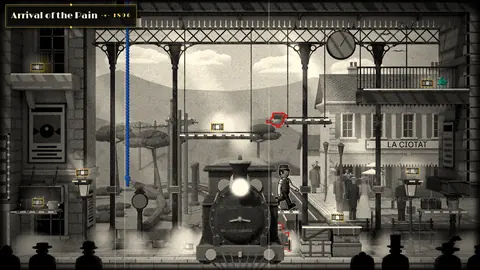 1896
Arrival of a Train at La Ciotat
Our room: Arrival of the Pain
-
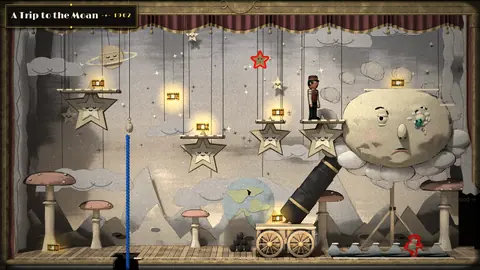 1902
A Trip to the Moon
Our room: A Trip to the Moan
-
 1923
Safety Last!
Our room: Safety Second
Free, in a desktop browser or as a download for Windows, Mac and Linux.
Quick answers
What is The Champ (1931) about?
Andy "Champ" Purcell, a former heavyweight champion who drinks and gambles, lives in poverty in Tijuana with his young son Dink. When he trains for a comeback fight to win back the boy's horse, the fight costs him his life.
Who wrote The Champ?
Frances Marion wrote the story and won the Academy Award for it. The screenplay is credited to Leonard Praskins and Wanda Tuchock, working with her. Marion is described as the first writer to win two Academy Awards, the first for The Big House.
Did Wallace Beery win an Oscar for The Champ?
Yes, the Best Actor award, shared with Fredric March for Dr. Jekyll and Mr. Hyde. By one account Beery finished one vote behind March, and the Academy then treated the result as a tie under rules since changed.
How old was Jackie Cooper in The Champ?
Nine. He was born in September 1922 and was making the film in the summer of 1931, soon after his success in Skippy. The Champ made him MGM's first major child star.
Is The Champ (1931) in the public domain?
Works published in the United States in 1931 are due to enter the public domain there on 1 January 2027, and The Champ is among the films listed for that date. Whether MGM renewed the copyright was not checked here, and the date applies to the United States only.
Has The Champ been remade?
Twice. The Clown (1953) starred Red Skelton as a washed-up clown rather than a boxer, and Franco Zeffirelli directed a new The Champ in 1979.
Why is The Champ set in Tijuana?
By one account, because the film was made while Prohibition was still the law in the United States, and a Mexican setting kept reformers and censors from objecting to the hero's easy access to drink.
Was the crying scene real?
It is a Hollywood story. Vidor is said to have pretended to dismiss a studio friend of Cooper's to bring on the boy's tears, then to have hired the man back. Cooper's own memoirs, by the same account, say he never liked the man.
Sources and further reading
- The Champ (1931 film), Wikipedia: cast, credits, plot, production, awards, reception, remakes
- The Champ (1931), Turner Classic Movies, article on the film's production and the Oscars
- Trivia: The Champ, Turner Classic Movies, on the Tijuana setting, the music, the crying scene and the Best Actor vote
- The Champ, Berlinale Retrospective 2020, King Vidor programme
- Frances Marion, Wikipedia: her career and her two Academy Awards
- Jackie Cooper, Wikipedia: his birth, his MGM contract and his account of Beery
- 2027 in public domain, Wikipedia: the works of 1931 due to enter the United States public domain